Understanding the world
Science helps children make sense of everyday things, from plants growing to shadows changing and circuits working.
Personalised online science support for Years 3 to 6, helping pupils understand key topics, build confidence, and enjoy learning how the world works.
Our KS2 Science tutoring helps children develop a stronger understanding of the main science topics taught in primary school. Whether your child needs help with animals, plants, forces, materials, light, sound, electricity, habitats, or working scientifically, lessons are tailored to their year group, level, and learning needs. We focus on making science clear, engaging, and easier to understand.
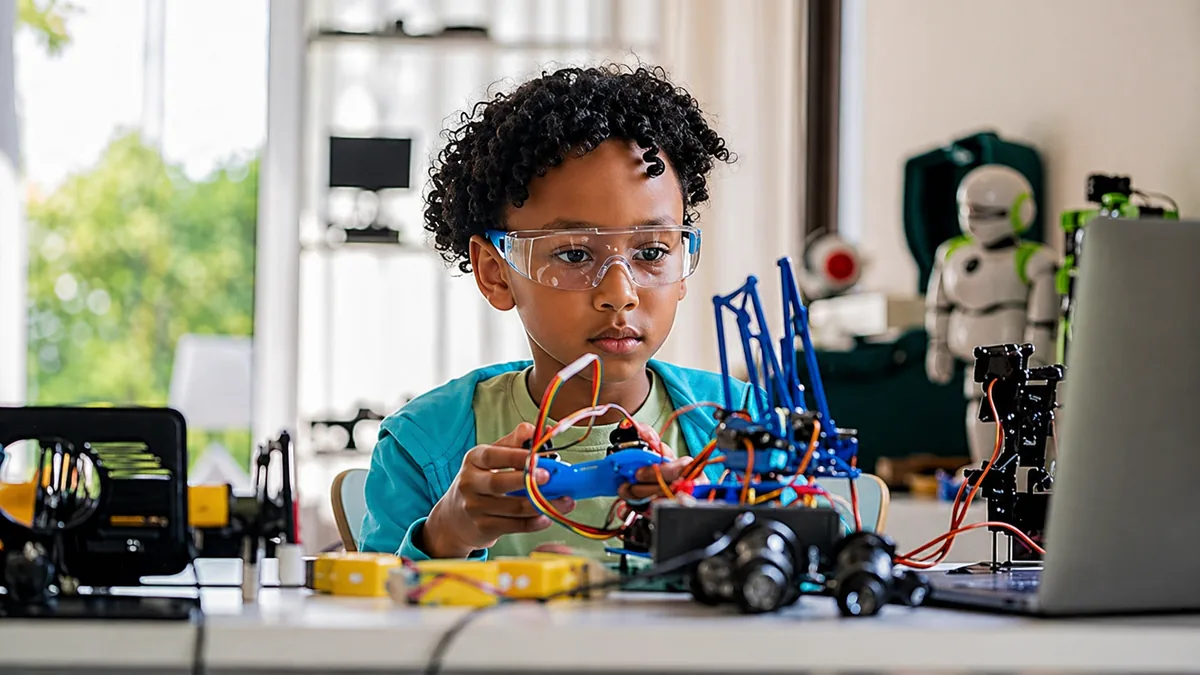
From habitats and electricity to forces and working scientifically, lessons help children connect ideas, remember key content, and explain what they know more clearly.
In KS2, children begin exploring science in a more structured way. They learn about living things, materials, energy, the human body, and the physical world around them. They are also expected to ask questions, observe carefully, compare results, and explain simple scientific ideas. A strong foundation in KS2 Science helps children progress with confidence as they move through school.
Science helps children make sense of everyday things, from plants growing to shadows changing and circuits working.
Good science teaching encourages children to ask questions and think more deeply about how things happen.
Children learn not only facts, but also how to describe, compare, and explain what they observe.
Strong science foundations support later success in secondary school science.
Our tutors support children across the main areas of the KS2 Science curriculum. Lessons can focus on a single topic your child finds difficult, or provide broader support across several areas.
Children learn about habitats, food chains, life processes, and how living things depend on each other and their environment.
Tutors can help children understand how plants grow, what they need to survive, and the functions of different parts of a plant.
Lessons can cover the human body, nutrition, skeletons, muscles, teeth, digestion, and how humans and animals stay healthy.
Children explore different materials, their uses, and how properties affect the way materials behave.
Support can be given with identifying rocks, understanding how fossils are formed, and learning about soil and the role it plays in plant growth.
Children learn about light sources, shadows, reflection, and how light helps us see.
Tutors can explain how sounds are made, how vibrations work, and how sound travels.
This includes pushes, pulls, friction, magnetic attraction, and simple explanations of movement and force.
Children are introduced to solids, liquids, and gases, and how materials change state.
Lessons can cover simple circuits, conductors and insulators, switches, and how electrical components work together.
For older KS2 pupils, tutors can support learning about planets, the Earth, the Sun, the Moon, and day and night.
An important part of KS2 Science is learning how to observe, predict, group, compare, carry out simple investigations, and record findings.
Many children enjoy science but still struggle with certain parts of it. Sometimes the difficulty is remembering facts, and sometimes it is understanding what the topic actually means. One-to-one tutoring can help break down these ideas more clearly.
Topic vocabulary can be hard to retain without regular explanation and use.
Children may know the idea but struggle to describe what happens and why.
Some pupils need support turning information into something more memorable.
Light and reflection, conductors and insulators, or habitats and adaptation can blur together.
Labelled processes and visual models can be difficult to interpret without guidance.
Children often hesitate if they are unsure of the terminology or process.
Pupils may recognise the topic but not know how to use the information in a question.
Some children find it difficult to understand what an experiment is showing.
Science ideas often depend on linking what happens to why it happens.
Missed content can affect confidence and understanding across later topics.
Science tutoring gives children more time to understand the "why" behind each topic. Tutors explain ideas clearly, connect facts to real examples, and help pupils build confidence with both knowledge and reasoning.
Tutors break down scientific ideas into simple steps so children can understand them without feeling overwhelmed.
Lessons can focus on exactly what your child is covering in school or finding difficult.
We help children become more comfortable with the words used in science so they can answer questions more confidently.
Tutors help pupils make sense of labelled diagrams, life cycles, circuits, food chains, and other visual science content.
As understanding improves, children often feel more able to answer questions and join in during science lessons at school.
Children begin exploring a wider range of science topics in a more structured way, including plants, animals, rocks, light, and forces.
Tutoring can help pupils strengthen knowledge of sound, electricity, habitats, digestion, and classification while becoming more confident with scientific language.
At this stage, children often meet more detailed topics such as life cycles, properties of materials, Earth and space, and more advanced forces.
Support can focus on the full KS2 Science curriculum, helping pupils strengthen weaker areas and prepare for the move to secondary school.
KS2 Science is not only about learning facts. Children are also expected to think scientifically. That means asking questions, making observations, spotting patterns, carrying out simple tests, and explaining results.
Children learn to start investigations with clearer curiosity and purpose.
We help pupils think ahead and explain what they expect to happen.
Noticing detail is a key part of understanding what an investigation shows.
Children build skill in sorting and comparing things using scientific features.
We help pupils become more confident with tables, notes, and simple results.
Children learn to notice repeated results and explain what they suggest.
Science questions often depend on seeing similarities, differences, and changes.
Pupils learn how to describe what the evidence shows in a clear way.
We help children support their explanations with what they observed or recorded.
Parents often look for science support when their child is confused by certain topics, losing confidence, or needing extra help to keep up in class. One-to-one tutoring can make science feel much clearer and less overwhelming.
Children gain a clearer grasp of important science ideas and processes.
Tutoring helps pupils remember key facts, terms, and topic content more effectively.
Children become more willing to answer questions and engage with science lessons.
Pupils learn how to describe what happens in science using the right vocabulary and clearer reasoning.
Tutoring reinforces classroom learning and helps children feel more secure in what they are being taught.
A stronger science foundation helps children feel more ready for secondary school topics later on.
If your child is struggling with a particular school topic, lessons can be tailored directly to that area.
If your child is struggling with a particular school topic, lessons can be tailored directly to that area.
With the right support, children can understand science more clearly, strengthen their confidence, and enjoy learning about the world around them. Whether your child needs help with a specific topic or broader support across KS2 Science, one-to-one tutoring can make a real difference.
Book a KS2 Science LessonGet in touch to find the right science tutor for your child's year group and needs.
Focused support for core topics, diagrams, scientific vocabulary, investigations, and stronger understanding across the KS2 curriculum.